
SSWR DSC Monitor: June/July 2026
This issue highlights doctoral students advocating for student autonomy and the freedom to work outside of their program.
Editoral
Marsha J. McDowell (She/Her/They)
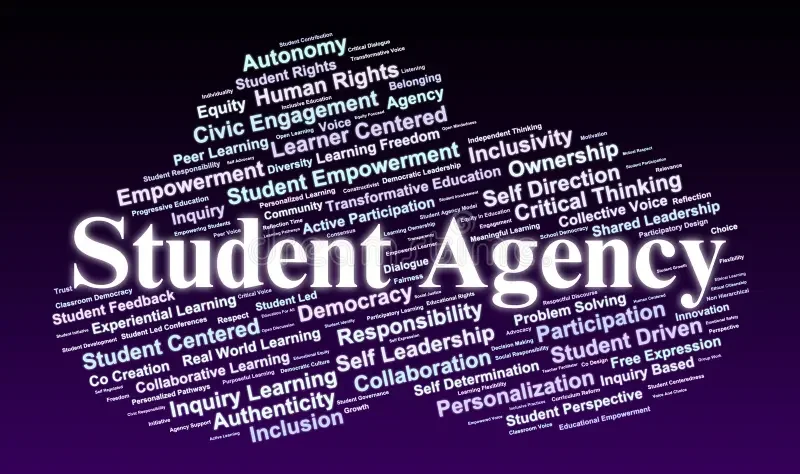
Image depicts black background with a word cluster. Words include student agency, student empowerment, self leadership, student centered, human rights, autonomy, democracy, self determination, shared leadership, and more.
When students have the power to set their own priorities and lead their communications, they move from being passive participants to active collaborators in academic and organizational life. Allowing student committees to choose their own members and manage their operations in ways that put students first and elevate student voices leads to a greater diversity of perspectives. This approach has helped create a vibrant and sustainable community of student scholars at SSWR, one that benefits the organization by fostering mentorship, meaningful collaboration, and academic and professional growth.
Self-determination theory tells us that student motivation is strongest when students feel connected, competent, and autonomous (Cullen & Oppenheimer, 2024). Yet, many institutional policies undermine student autonomy. The recent policy changes at SSWR, including the introduction of administrative oversight, the surveillance of DSC activities, and the requirement that staff are involved in every committee activity, are examples of this trend. These measures risk reducing students’ sense of agency and undermining the trust essential for effective student leadership.
SSWR leadership has argued that reducing student autonomy is necessary to protect the organization financially, based on the belief that students lack the experience to make responsible decisions. However, the record of the DSC over the past twelve years tells a different story. Except for one activity that raised safety and risk concerns, the DSC has successfully led many initiatives without issue. It is important to note that this single concern came from pro-Zionist members who wanted to attend a 2025 DSC-led luncheon about the ongoing genocide in Palestine and the lack of pro-Zionist representation. The purpose of the event was to discuss ways for students and scholars to support Palestinians and others impacted by pro-Zionist policies; it was not intended as a forum for pro-Zionist members to present their views on Israeli statehood. Therefore, decision-makers should consider the many successes of the DSC against this single complaint, and, notably, the Board of Directors' failure to fully explain or disclose the full context or number of complainants, before making sweeping procedural changes.
Is it really justified to risk losing the engagement and effectiveness of student committees, often described as vital to the organization’s future, over one complaint? Is it reasonable to impose broad restrictions on student autonomy in response to a single incident, especially when that incident involved the lack of pro-Israel representation in a discussion about the ongoing genocide carried out by both Israel and the United States?
When organizations respond to one grievance with major policy changes, leadership has a responsibility to pause, reflect, and consult those most affected. In this case, it is students, many from historically marginalized backgrounds, whose voices and leadership are being diminished. At SSWR, the decision to revoke the DSC’s autonomy after student advocacy on Palestine not only erases years of student effort to gain a real voice but also sets a troubling precedent. These actions risk replacing trust, open dialogue, and meaningful engagement with a climate of censorship and fear. The Board of Directors’ refusal to meet with committee leaders further demonstrates a desire to silence student voices.
This is a moment for all of us to reflect on the potential biases of organizational leadership and how those biases affect academic work. We must consider how these dynamics influence which research gets attention, which presentations are selected, who is chosen for leadership roles, and which scholars receive opportunities. Only by seriously engaging with these questions can academic and research organizations remain places for genuine inquiry, inclusive participation, and the free exchange of ideas.
As a new co-chair of the Communications Sub-Committee, I urge leadership to open direct conversations with all DSC leaders—without requiring intermediaries—so we can discuss how these top-down, hierarchical organizational changes are affecting not only student leaders, but all students who want to participate in research organizations. The new requirements for unnecessary surveillance are already having a chilling effect on student activities at SSWR, with evidence of declining student involvement and engagement. Restoring open dialogue and genuine student agency is not just a matter of process but is essential for sustaining the vibrant, inclusive scholarly community that SSWR aspires to be.
Disclaimer: The views and opinions expressed in this editorial are solely my own and do not represent any other DSC members or the Society for Social Work and Research (SSWR). This statement reflects my personal perspective as a dues-paying member and does not constitute an official position of any organization.
References and Further Reading
Cullen, S., & Oppenheimer, D. (2024). Choosing to learn: The importance of student autonomy in higher education. Science Advances, 10(29). https://doi.org/10.1126/sciady.ado6759
Murray, B.J., Harty, J.S., Dettlaff, A.J. (2026). Accountability or complicity? Social work’s dual commitments and crisis of accountability in the US. Critical and Radical Social Work, Early View. https://doi.org/10.1332/20498608Y2025D000000118
This issue includes
The Cost of a PhD by Kevin Yu (He/him)
The Uncertainty of Academic Freedom by Leah Munroe (She/Her)
Doctoral Student Spotlights: Thank you, Hannah & Leah! Welcome Whitney!
Call for nominations: Doctoral Student Achievements, DSC Application
Social Work Snippets: Grant and Job Opportunities

The Cost of a PhD: Why Students Need the Freedom to Work
Kevin Yu (He/Him)
Image Description:
Image depicts a small white piggy bank with a student in the background with his hand on his head, looking frustrated. A silver laptop with a red stapler behind it are on the desk. A bookshelf is in the background.
The Cost of a PhD: Why Students Need the Freedom to Work
As long as it does not affect their work and progress, PhD students should be allowed to engage in paid opportunities outside of the university.
Given that most of us are researchers, here are some statistics to support my argument. The stipend for students in my PhD program is $1,417 biweekly, or $2,834 per month before taxes. My university is in a relatively low-cost-of-living area compared to some universities that are located in major urban centers. Still, according to the official state website, the estimated monthly spending for a single adult is about $2,302 in this area. This means that our stipend barely covers basic monthly expenses. However, these statistics come with a few asterisks.
First, students in my program are not given a stipend during four months of the summer, which reduces our effective monthly stipend on a yearly basis to about $2,125, below the estimated monthly spending threshold.
Second, the estimated monthly spending is based on the average adult and does not account for the additional expenses that come with being a PhD student. To share our work, network, and remain “productive,” we are expected to attend conferences each year, sometimes paying out of pocket. In a survey conducted by my program, we found that students spend thousands of dollars on conference travel, even after receiving travel support from the university. Additionally, many of us relocated to a different city, state, or even country to begin our PhD programs. Relocation costs are a major upfront burden, but there is also the recurring expense of traveling home to visit loved ones. There are many other costs that I will not go into detail about, such as research software and transportation expenses.
Next, from my own research and conversations with students in other programs, the stipend offered by my school is actually on the higher end. This means that students in higher cost-of-living areas may be trying to make do with the same amount of money, or even less, while living in places where everything costs significantly more.
Another issue is that many PhD students make too much to qualify for benefits while still struggling financially. In Michigan, the income limit for SNAP benefits for a one-person household is $1,696 per month. No matter how I calculate it, I do not qualify, which is a challenge faced not only by students but by many low-income individuals and families.
This may seem like a lot of irrelevant information for a piece about PhD students doing outside work. You might be wondering: wasn’t this supposed to be about external employment? It is. What I have shown is that PhD students are often not paid enough to support themselves on their stipends alone, which makes finding additional income not just a preference, but a necessity. I am making some broad generalizations here, but most people would prefer not to take on extra work while completing a PhD. For many of us, however, it is not a choice. In my own cohort, everyone has had outside work commitments at some point during the program. We have all expressed the same sentiment: we would much rather focus solely on our doctoral work, but financial realities make it difficult to turn down additional opportunities.
As social workers, we possess many valuable skills that make finding part-time work relatively feasible. The harder challenge often comes from resistance within our programs. Students in my program have reported facing pushback when disclosing work commitments outside the university. Faculty members are concerned that “we would be too stressed balancing different responsibilities.” I am sure these concerns come from a place of care. But not being able to put food on the table is far more stressful. We are not just students or researchers, paying bills is also one of our responsibilities. Others have pointed to policies that prohibit students from working outside the university during their programs, but these policies feel like a relic of the past. Perhaps a few decades ago, PhD stipends alone were sufficient for students to fully support themselves while dedicating all of their time to their studies. Today, however, that is no longer the reality. In practice, these policies only limit students’ ability to financially support themselves.
I recognize that there are structural and institutional factors that determine how much students are paid, and these are not easily changed by one person or even one group. While increased pay would certainly be welcome, that is not the primary point I am trying to make here. What I want is for administrators to acknowledge the reality that it is extremely difficult for many students to survive on stipends alone. None of us are living lavishly, we are simply trying to make ends meet, and the current economic climate is making that increasingly difficult. Pursuing a PhD should not mean living on the brink of poverty for years.
If students are able to find outside work and still fulfill all of the requirements of their programs, I struggle to see why administrators should oppose that. Shouldn’t institutions want to support their students and see them thrive?
Everything I have written thus far also fails to fully acknowledge the different circumstances faced by PhD students. For example, students who are parents or caregivers often face significantly higher expenses and have less flexibility to take on outside work, yet their stipends are no higher. Similarly, international students are constrained by visa restrictions that limit their ability to work outside the university while in the United States. Programs must give greater consideration to these realities, particularly in the current economic climate.
If you do not want us to work outside the university, pay us more. If you cannot, then support us in our efforts to survive. Do not put barriers in our way when we are simply trying to make ends meet.

The Uncertainty of Academic Freedom
Leah Munroe (She/Her)
Image depicts a dark empty hallway in a facility. The walls are bare and darkness of the image obscures he details of the floor.
The Uncertainty of Academic Freedom
Although the job market has always been a worrisome beast for graduating Ph.D. students, it seems to be plagued with a few extra obstacles this year. Several universities have experienced funding cuts or implemented hiring freezes. Additionally, many universities were slow to post job openings, and some have been canceled entirely. The update I did not see coming involved the proposed document from the federal government issued earlier this month to nine universities—including Brown University, Dartmouth College, Massachusetts Institute of Technology (MIT), University of Pennsylvania (Penn), University of Arizona, University of Southern California (USC), Vanderbilt University, University of Texas at Austin, and University of Virginia. The proposed “Compact for Academic Excellence in Higher Education” offers preferential federal funding if universities comply with specific policy requirements. These include limits on international student enrollment, tuition freezes, the adoption of standardized testing, and definitions of sex and gender tied to “reproductive function and biological processes.” The document also states that institutions choosing values other than those in the compact would “elect to forego…federal benefits.”
So far, seven of the nine institutions have publicly declined the compact (including Brown, MIT, Dartmouth, Penn, USC, Arizona, and Virginia) while Vanderbilt and the University of Texas have not issued definitive rejections. While this may be the most blatant display of federal policy attempting to shape academic institutions, it is certainly not the first. Earlier this year, universities responded to proposed cuts to federal research and indirect cost funding by instituting hiring freezes, adjusting research budgets, and reducing graduate student intake.
These developments feel especially unsettling as I prepare to enter the job market. The professional landscape already feels uncertain, and the added weight of ideological constraint and financial austerity only intensifies the challenge. Yet social work has always taught us to work within imperfect systems and to hold fast to values of justice and integrity. The same skills we use to navigate complex systems, critical thinking, advocacy, and coalition-building are the ones we will need now to preserve academic integrity and inclusivity.
If universities are to remain spaces of inquiry and imagination, their future depends on the voices willing to challenge constraints rather than yield to them. As new scholars, we inherit not only the uncertainty of this moment but also the opportunity to reimagine what the academy can become: transparent, equitable, and grounded in social justice. The task ahead is not only to find a position, but to help ensure that the values underlying social work continue to have a place within higher education.
references and Further Reading
American Association of Colleges and Universities. (2025, October 3). Statement on the Trump administration’s “Compact for Academic Excellence in Higher Education.” https://www.aacu.org/newsroom/aac-u-statement-on-the-trump-administrations-compact-for-academic-excellence-in-higher-education
American Association of University Professors – Penn. (2025, October 2). Statement by the AAUP-Penn executive committee on the “Compact for Academic Excellence in Higher Education.” https://aaup-penn.org/statement-by-the-aaup-penn-executive-committee-on-the-compact-for-academic-excellence-in-higher-education
Gerhard, D. (2025, February 27). US universities reduce PhD admissions in response to federal funding cuts. The Scientist. https://www.the-scientist.com/us-universities-reduce-phd-admissions-in-response-to-federal-funding-cuts-72734
Mallapaty, S. (2025, March 21). ‘All this is in crisis’: US universities curtail staff and spending as cuts take hold. Nature. https://www.nature.com/articles/d41586-025-00849-y
Moody, J. (2025, February 19). Federal funding uncertainty prompts hiring freezes. Inside Higher Ed. https://www.insidehighered.com/news/government/politics-elections/2025/02/19/federal-funding-uncertainty-prompts-hiring-freezes
Ropes & Gray LLP. (2025, October). White House invites nine universities to enter “Compact” in exchange for access to federal funds. https://www.ropesgray.com/en/insights/alerts/2025/10/white-house-invites-nine-universities-to-enter-compact-in-exchange-for-access-to-federal-funds
U.S. Department of Education. (2025, October 1). Compact for Academic Excellence in Higher Education. [PDF]. Washington Examiner. https://www.washingtonexaminer.com/wp-content/uploads/2025/10/Compact-for-Academic-Excellence-in-Higher-Education-10.1.pdf

Doctoral Student Spotlight
The image depicts a non-binary person writing in an unlined, cream-colored journal at a dark wooden desk. The person’s head is out of focus, and only their right arm is visible. The person has tattoos on their right arm and wears a silver ring on their index finger.
Thank you Hannah & Leah!
A big thank you to Hannah Boyke and Leah Munroe, who have dedicated the past two years to leading the Communications Committee. Their commitment, creativity, and teamwork have been invaluable to our group, and we deeply appreciate the energy and care they poured into every project.
We’re especially grateful to Hannah, who will continue as co-chair to guide us through this next leadership transition. While they’ll be stepping back a bit to focus on completing their dissertation, Hannah’s ongoing support and experience will be a tremendous asset as we move forward. Please join us in expressing our gratitude to both Hannah and Leah for their hard work and leadership!

Image depicts a large “Thank you” in the center of a dark blue background. A microscope, book, beaker, notecard, and science images are scattered behind on a light blue background.
Introducing Whitney Zeigler
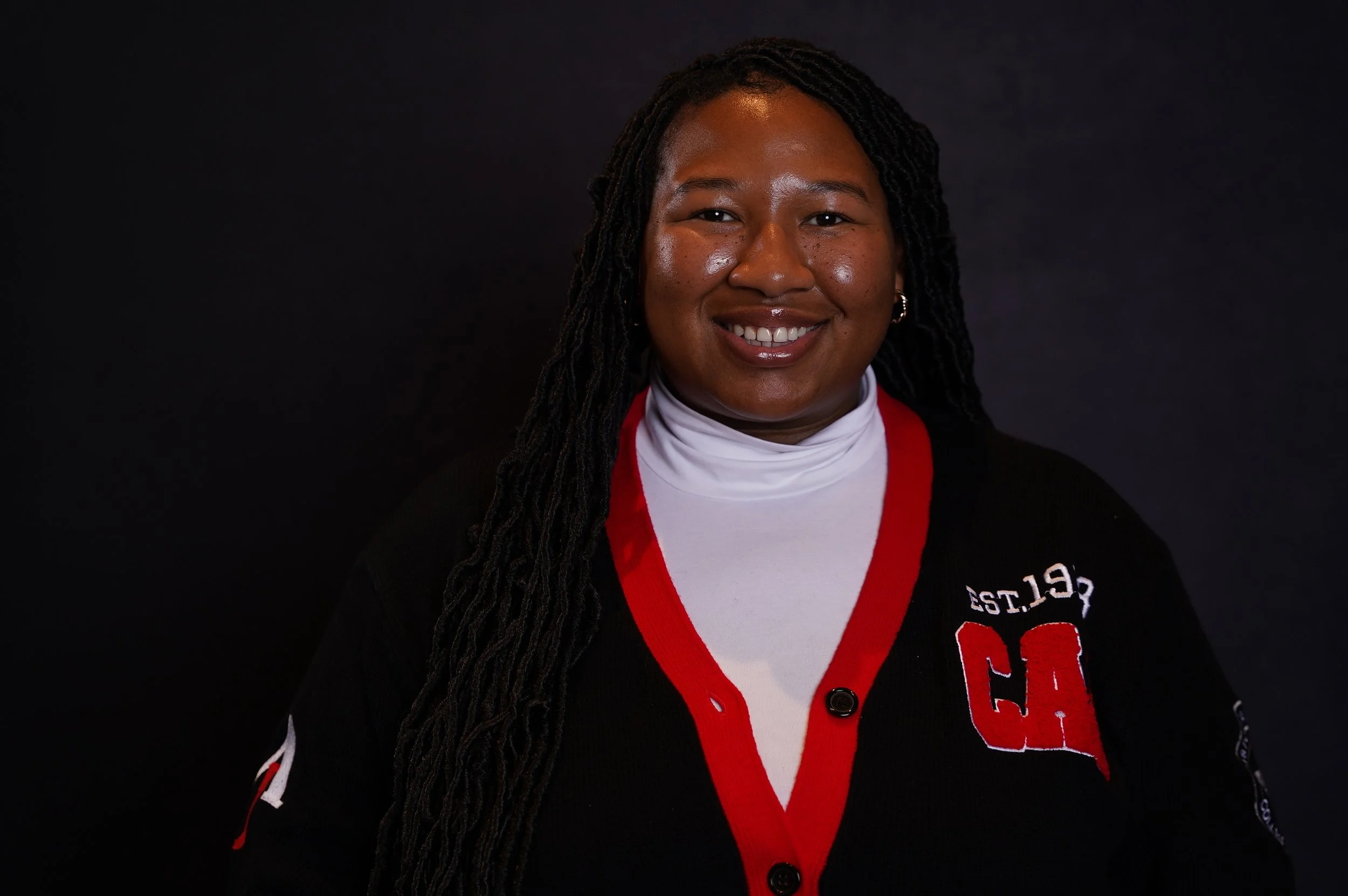
The image depicts a young, smiling, Black woman wearing a white turtleneck under a black jacket with red trim, black buttons, and a “CA” logo.
Please join us in welcoming Whitney Zeigler as the SSWR Board Doctoral Student Director-at-Large and Chair of the Doctoral Student Committee.
Growing up in Mulga, Alabama, Whitney Zeigler developed a deep appreciation for the strengths and resilience of Black Southern communities. Those early experiences continue to shape her scholarship, which explores how schools, communities, and public systems can better support the behavioral health, development, and educational success of Black Southern youth. She is a rising third-year doctoral student at the Whitney M. Young, Jr. School of Social Work at Clark Atlanta University, a qualitative researcher, a higher education case manager, and a member of Alpha Kappa Alpha Sorority, Incorporated.
Across more than six years of professional experience spanning K–12 education, psychiatric social work, nonprofit leadership, and higher education, Whitney has remained committed to bridging research and practice through interdisciplinary collaboration. Her scholarship focuses on positive youth development, behavioral health, restorative approaches, community-engaged qualitative research, and educational policy. She values collaboration across disciplines and believes many of today's most pressing social challenges require partnerships among social work, education, public health, and behavioral health professionals.
Whitney holds appointments as a Robert Wood Johnson Foundation Health Policy Research Scholar, Council on Social Work Education Minority Fellowship Program Doctoral Fellow, and Whitney M. Young, Jr. School of Social Work Dean's Fellow. She also serves as Doctoral Student Director-at-Large on the Society for Social Work and Research (SSWR) Board of Directors and Chair of the SSWR Doctoral Student Committee, where she advocates for doctoral student leadership, mentorship, and research engagement across the profession.
Looking ahead, Whitney will launch The Fourth Wall, a podcast series debuting in August 2026 that explores doctoral education, research, mentorship, and the hidden curriculum of academia through conversations with scholars, practitioners, and doctoral students.
Recent Publications
Goss, A. C., & Zeigler, W. M. (2026). A Community Engagement and Validation Process: A Tutorial for Relational and Contextual Data Collection Methods. Journal of Participatory Research Methods, 7(3). https://doi.org/10.35844/001c.158346
Research Interests
Positive youth development, Behavioral health integration, Community-engaged qualitative research, Restorative approaches, Educational policy and systems change, Black Southern youth development, Youth civic engagement, Interdisciplinary collaboration

DSC Call for Nominations: Doctoral Student Achievements
Image depicts several organs and white balloons with gold string in front of a bright blue background. The balloons are emerging from the bottom left corner of the photo.
Submit Nominations for Doctoral Student Achievements!
Celebrate doctoral students’ accomplishments in research, practice, and/or degree milestones!
SSWR DSC Communications Subcommittee has an ongoing call for nominations to showcase social work doctoral student achievements.Nominate a colleague (or yourself) to have their recent accomplishments featured on SSWR DSC social media and in a future DSC newsletter.
The nomination form asks for your name, pronouns, program, a description of the accomplishment(s), information about your research, and brief bio information. If you want, you can also upload a photo of the nominee for us to share and tell us your social media handles to mention in the posts. Student achievements will be posted to social media and the SSWR DSC website as they are received. Achievements will also be featured on the SSWR DSC Newsletter.
View past students showcased for their achievements here.
CLICK HERE TO NOMINATE A COLLEAGUE (OR YOURSELF) TO BE FEATURED
Join the Doctoral Student Committee!!
We are currently accepting applications for all DSC sub-committees:
The Mentoring Sub-Committee aims to support doctoral students in forming connections with peers and faculty through programs such as Coffee with a Scholar, the Conference New Attendee Program, and Writing Retreats. Conference -
The Communications Sub-Committee facilitates networking and experience sharing among doctoral students through our bi-monthly newsletter co-produced by the entire sub-committee, the SSWR Doctoral Student Members Facebook, and the SSWR Doctoral Student Website.
The Conference Sub-Committee hosts 3 student-led events: Meet the Scientist, The Doctoral Student Luncheon, and the DSC Social Hour. Our goals are to highlight the incredible research and projects by doctoral students, foster connections, and provide a platform for issues important to students.
The Student Engagement Sub-Committee is tasked with developing programming for doctoral students throughout the year outside of the SSWR conference. The creation of this sub-committee resulted from the desire for doctoral students to engage and connect with each other throughout the year to network, share resources and training, and to allow more students to serve on the SSWR DSC.

Social Work Snippets
Resources for PhD Students
Research on support in doctoral in programs (Krings et al., 2023)
“Sharing a resource that might be of interest to the DSC and its members. We wrote it with the goal of finding useful and actionable ways to better support doc students” — Amy Krings
Full Citation: Krings, A., Mora, A. S., Bechara, S., Sánchez, C. N., Gutiérrez, L. M., Hawkins, J., & Austic, E. (2023). How Early Social Work Faculty Experienced Support in Their Doctoral Programs. Journal of Social Work Education, 60(2), 206–224. https://doi.org/10.1080/10437797.2023.2279789
Job Opportunities and Funding
Grant Opportunities:
William T. Grant Foundation - Research Grants on Reducing Inequality
Deadline: July 29, 2026
Paul P. Fidler Research Grant (Research on College Transitions)
Deadline: July 13, 2026
Family Process Institute - Grants Initiative
Deadline: September 1, 2026
Postdoctoral Fellowship in Research on Social Determinants of Health & Prevention Science— Virginia Commonwealth University School of Social Work
Deadline: Ongoing
Job Openings:
California State University, East Bay: Assistant Professor of Social Work (Generalist Practice)
Harvard Kennedy School Government Performance Lab: Government Innovation Fellow - Children & Families
University of California, Berkeley Labor Center: Research & Policy Associate
Study Recruitments:
Wayne State University: Multiracial Study Screening
Are you a Biracial or Multiracial individual between 18 - 29 years old? Do you think you have depression and/or anxiety? If so, you may be eligible to participate in a study. Mental health counseling will be provided to eligible participants as a part of the study intervention that is tailored to the needs of Multiracial individuals living in Michigan. There is no cost to participants.
Additional Resources
RESOURCES FOR NEWER CONFERENCE PRESENTERS AND ATTENDEES
How to Give a Scientific Talk: https://www.nature.com/articles/d41586-018-07780-5
Video on How to Confidently Present your Research at Conferences: https://asiaedit.com/webinar/how-to-confidently-present-your-research-at-conferences-in-person-and-online
Not following Network to Advance Abolition in Social Work (NAASW)?
“The Network to Advance Abolition in Social Work (NAASW) is a grassroots formation working to end carceral social work and to realize a world free of police, prisons and punishment. We are committed to supporting the development of life affirming practices and institutions, to advancing solidarity across movements for justice and liberation and to bringing abolitionist politics and principles to social work practice.” Social Work for Palestine
ADDITIONAL INFORMATION
Disclaimer: This newsletter is created as free service by SSWR Doctoral Student Committee Communications Subcommittee members:
Marsha McDowell (She/Her/They) Co-chair
Kevin Yu (He/Him) Co-Chair
Umaira Khan (She/Her)
Emily Joan Lamunu (She/Her)
Seon Kyeong Ahn (She/Her)
Luisa (Lucy) Prout (She/Her)
Chenyu Zhao (She/Her)
Ruiji Ma (She/Her)
Sadaf Sedaghatshoar (She/Her)
Jennifer Elliot (She/Her)
The opinions expressed in this newsletter are the opinions of the individuals listed above alone and do not claim to represent the opinions of SSWR or the SSWR Doctoral Student Committee